A five-seat water sports car gives scenic-area operators a different proposition from a personal watercraft: it combines recognizable luxury-car-inspired styling with seating for a small group. It is ideal for resorts, water park, lakeside attractions, marinas, and controlled sightseeing routes where presentation, passenger comfort, and predictable daily operation matter as much as speed. This guide explains the current specification, the operating model, and the checks a venue should complete before purchase.
Five-Seat Water Sports Car Dimensions and On-Water Character
The current configuration is designed for five occupants. Its exterior takes cues from the formal proportions and grille-led presence associated with Rolls-Royce automobiles, giving the craft a premium visual identity at a dock or waterfront arrival point.
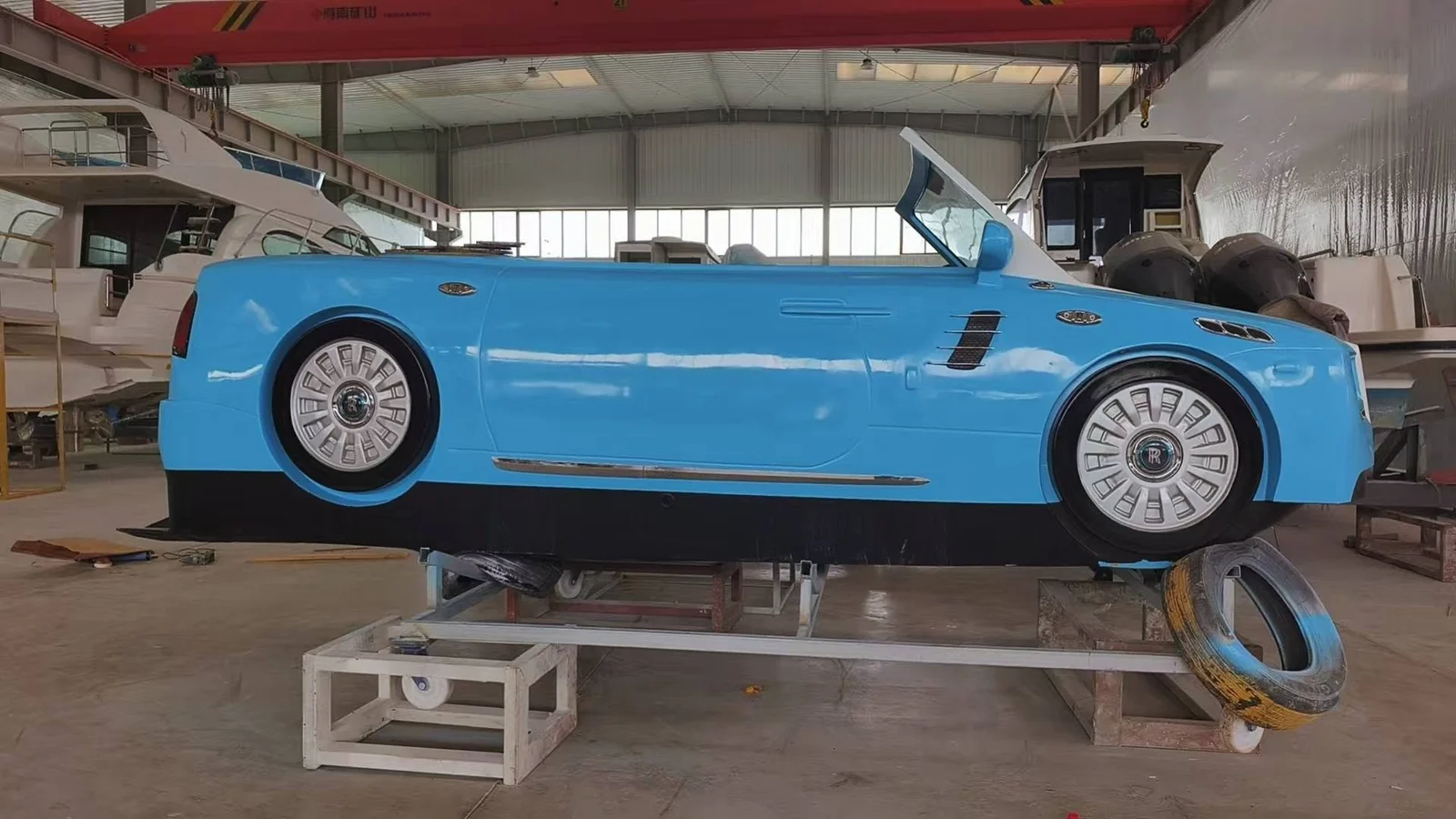
| Specification | Current value |
|---|---|
| Overall length | 4.98 m |
| Beam | 2.20 m |
| Molded depth | 0.96 m |
| Passenger capacity | 5 seats |
| Maximum stated speed | 25 km/h |
| Hull material | Fiberglass-reinforced plastic (FRP) |
The 2.20-meter beam supports a planted stance and useful cabin width, while the FRP construction allows the hull and automotive-style bodywork to be formed as durable, repeatable surfaces. The propulsion package is configured to deliver strong response without turning the ride into a high-speed thrill product. A 25 km/h maximum speed is better understood as a practical ceiling for controlled leisure routes; actual operating speed should be set lower where traffic, wake restrictions, visibility, passenger condition, or local rules require it.
Stable travel depends on more than hull dimensions. Passenger distribution, wind, chop, turning input, loading, and maintenance all affect behavior. Capacity should never be inferred from the number of people who can physically fit on board. The approved loading information, final propulsion configuration, and local passenger-vessel rules must govern every trip.
A Practical Resort Operating Model
For a scenic area, the craft can support short guided experiences, waterfront photo packages, hotel-to-marina transfers within an approved zone, or premium family rides. Five seats let an operator serve couples, families, and small groups without the one-rider-at-a-time throughput pattern of many personal watercraft. Operators comparing formats can also review the practical differences in our water jet car versus jet ski guide.
A simple route is usually easier to manage than open free-driving. Mark an embarkation point, a controlled departure lane, a turning area, and a return approach. Set trip time around the site’s water area and boarding process rather than the craft’s maximum speed. Ten efficient departures with consistent briefings may produce a better guest experience than fewer trips delayed by complicated routes or unclear queues.
Daily operation should assign named responsibility for the pre-opening inspection, passenger briefing, dispatch decision, radio or shore communication, and end-of-day cleaning. A workable check should cover the hull, propulsion intake, steering response, battery and fuel or energy system as applicable, bilge condition, required safety equipment, and visible damage. Record faults and remove the craft from service when a safety-critical item is unresolved.
Boarding deserves particular attention. Staff should stabilize the craft, control the passenger sequence, keep the dock edge clear, and distribute occupants according to the approved loading plan. Suitable life jackets must be correctly sized and readily accessible; the U.S. Coast Guard’s life-jacket guidance also recommends wearing an approved life jacket while underway. Operators outside the United States should use the equivalent local maritime authority’s requirements.
Site Planning, Revenue, and Maintenance Decisions
The business case begins with conditions at the site. Confirm water depth, launch access, permitted operating zones, speed and wake limits, noise rules, seasonal water-level changes, rescue access, and insurance conditions. Commercial passenger use may be regulated differently from private recreational use. Licensing, inspection, operator qualifications, and passenger limits should therefore be verified with the authority responsible for the actual waterway before tickets are sold.
Revenue planning should use realistic operating hours and occupancy, not the theoretical five-seat maximum on every departure. Build a model with conservative assumptions for weather closures, staff breaks, charging or refueling, cleaning, maintenance, and low-demand periods. Ticket tiers can distinguish a standard shared ride from a private group booking, but the timetable must retain enough buffer for safe boarding and route control.
FRP is widely used because it supports complex shapes and is repairable by trained technicians, yet it still needs disciplined care. Rinse the hull and relevant propulsion components after operation, especially in salt or silty water. Inspect gelcoat damage, fittings, seals, upholstery, electrical connections, and the propulsion system on a documented schedule. Confirm access to consumables, replacement parts, technical support, and repair skills before choosing a final configuration.
The water sports car model range provides a useful starting point for comparing styling and layouts. Project buyers should then send the intended water type, daily trip plan, passenger profile, local compliance requirements, and desired options through the project inquiry page. Final specifications, speed, equipment, and suitability remain subject to the selected propulsion system, production configuration, loading, water conditions, and local approval.
Questions Scenic-Area Operators Ask Before Ordering
Is the craft an official Rolls-Royce product?
No. The description refers only to luxury automotive design cues in the exterior. There is no stated manufacturing, licensing, or endorsement relationship with Rolls-Royce Motor Cars.
Can all five seats be used in commercial service?
Five seats are provided in the current configuration, but the permitted commercial passenger count must follow the final certified loading information and the rules of the operating location.
Is 25 km/h the normal operating speed?
No. It is the stated maximum for the current configuration. The operating speed should be selected for the route, visibility, traffic, wake limits, weather, passenger comfort, and local law.
What information is needed for a resort quotation?
Provide the country and site, fresh or salt water use, expected daily trips, passenger profile, launch and storage arrangements, preferred power configuration, required safety equipment, and any local certification or inspection requirements.
What should staff check before the first trip each day?
Use a written checklist covering hull condition, propulsion and steering, power or fuel systems, bilge condition, required safety gear, communications, weather, route status, and the boarding area. Any critical defect should be resolved before passengers embark.